


-250x250w.jpg "100pcs 10 Types Car Remote Control Touch Push Button Micro Switch")


High-Sensitivity Sound Sensor Module LM393
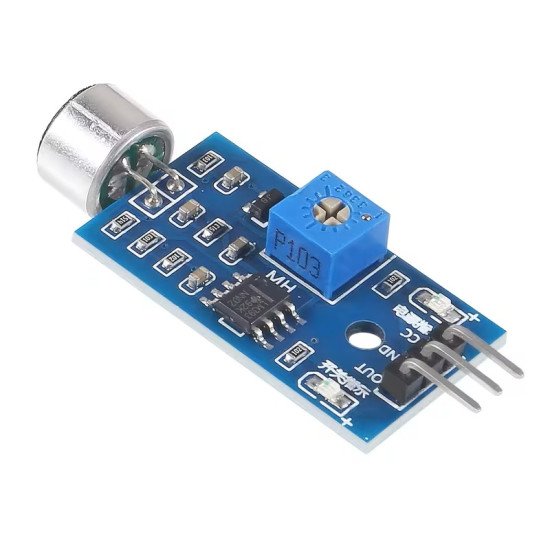
This high-sensitivity sound sensor module features a sensitive electronic condenser microphone paired with an LM393 voltage comparator integrated circuit. Designed to detect ambient sounds or specific sound thresholds, it outputs a simple digital logic signal (high/low) when the sound level exceeds a predefined threshold. This module is widely used in voice switches, clap-controlled relays, security alarms, and smart home automation projects.
????️ Key Features
• High-Sensitivity Electronic Microphone: Capable of picking up low-intensity ambient sounds, clapping, and human voices.
• Adjustable Sensitivity Threshold: Equipped with a built-in precision blue potentiometer (variable resistor) for easy calibration and adjustment of the sound level.
• Two LED Indicators:
* Power Indicator: Illuminates when the module is powered on correctly.
• Switch/Output LED: Illuminates immediately when a sound above the predefined threshold is detected.
• Digital (Logic) Output: Outputs a clear, noise-free digital signal, directly compatible with microcontrollers such as Arduino, ESP32, and Raspberry Pi.
• Easy Installation: Includes a pre-installed M3 screw hole for easy integration into enclosures or boxes.
???? Technical Specifications
Parameter Specifications
Operating Voltage: 3.3V - 5V DC
Output Type: Digital Logic Output (0 & 1)
Basic Voltage Comparator: LM393
Microphone Type: High-Sensitivity Electronic Condenser Microphone
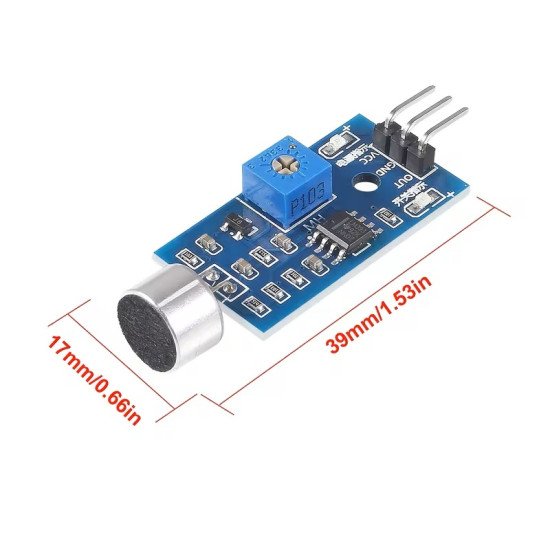
Approximate Dimensions: 32mm x 17mm x 15mm
???? Pin Configuration
The module features a three-pin connector design for direct connection to a breadboard or using jumper wires:
1. + (VCC): Connect to a 3.3V or 5V DC power supply.
2. GND: Connect to the negative (ground) terminal of the circuit.
3. OUT: Digital output pin.
• Outputs a high signal by default under normal and quiet conditions.
• Outputs a low signal immediately when the volume level exceeds the calibration threshold.
⚙️ Calibration and How It Works
1. Power the module with 5V. The power LED on the board will light up.
2. In a quiet room, if the switch LED is lit, use a small screwdriver to turn the blue potentiometer clockwise until the switch LED turns off.
3. Tap or clap near the microphone. You will see a rapid flash in the switch LED, indicating that the threshold has been exceeded and the output pin state has changed.
???? Package Contents
• High-Sensitivity Acoustic Microphone Sensor Module (1 x 1)


-250x250.jpg "MQ-4 Methane Gas Sensor Natural Coal Co Methane Detector Module for Arduino")
-250x250.jpg "MQ-4 Methane Gas Sensor Natural Coal Co Methane Detector Module for Arduino")




-250x250.jpg "100pcs 10 Types Car Remote Control Touch Push Button Micro Switch")